Contracts management is the One Platform area used to inspect and maintain the commercial and activation context of product services.
Contracts are managed from Business Assets > Contracts. A contract groups the customer, issuer, legal representative, recipient, product items, activation data, and lifecycle status used by the platform.
| Capability | Description |
|---|---|
| Contract list | Search and inspect contracts issued or managed by the selected organization. |
| Contract creation | Define the contractual context for a customer and product activation. |
| Contract information | Maintain issuer, customer, legal representative, recipient, dates, and references. |
| Contract items | Add and inspect product or service lines included in the contract. |
| Feature selection | Configure product features exposed by the selected contract item. |
| SKU parameters | Store product-specific activation or provisioning parameters. |
| Credit configuration | Select credit-enabled metrics and define the initial quantity for each metric when a Credit billing model applies. |
| Service Activation Group | Review and confirm the activation package that groups contract-level activation data. |
| Status monitoring | Follow contract and item status during activation and provisioning. |
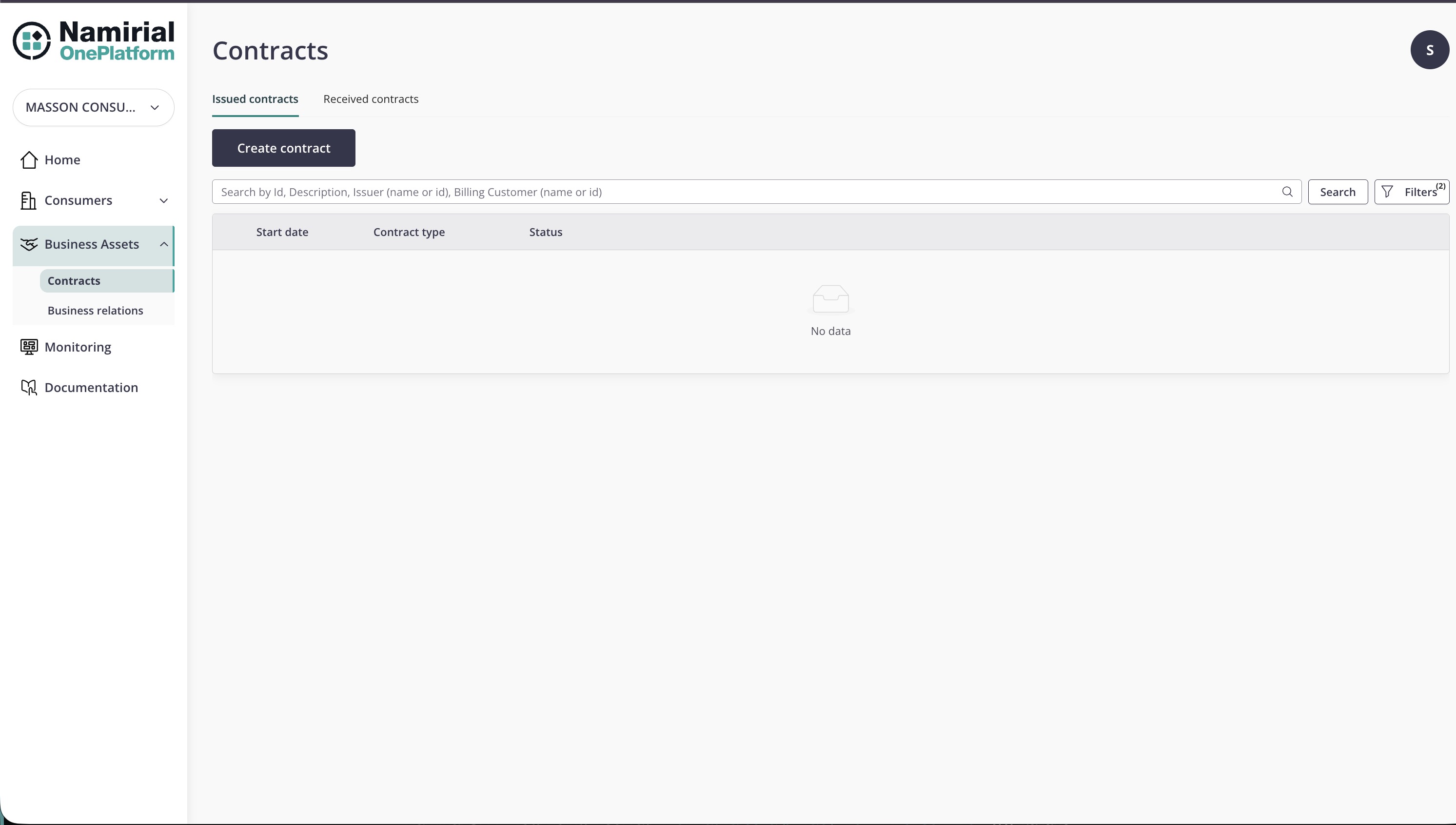
The contract list is the entry point for contract operations.
Use it to search by customer, issuer, contract number, status, or other available criteria. The available tabs distinguish contracts issued by the selected organization from contracts received or managed in another role.
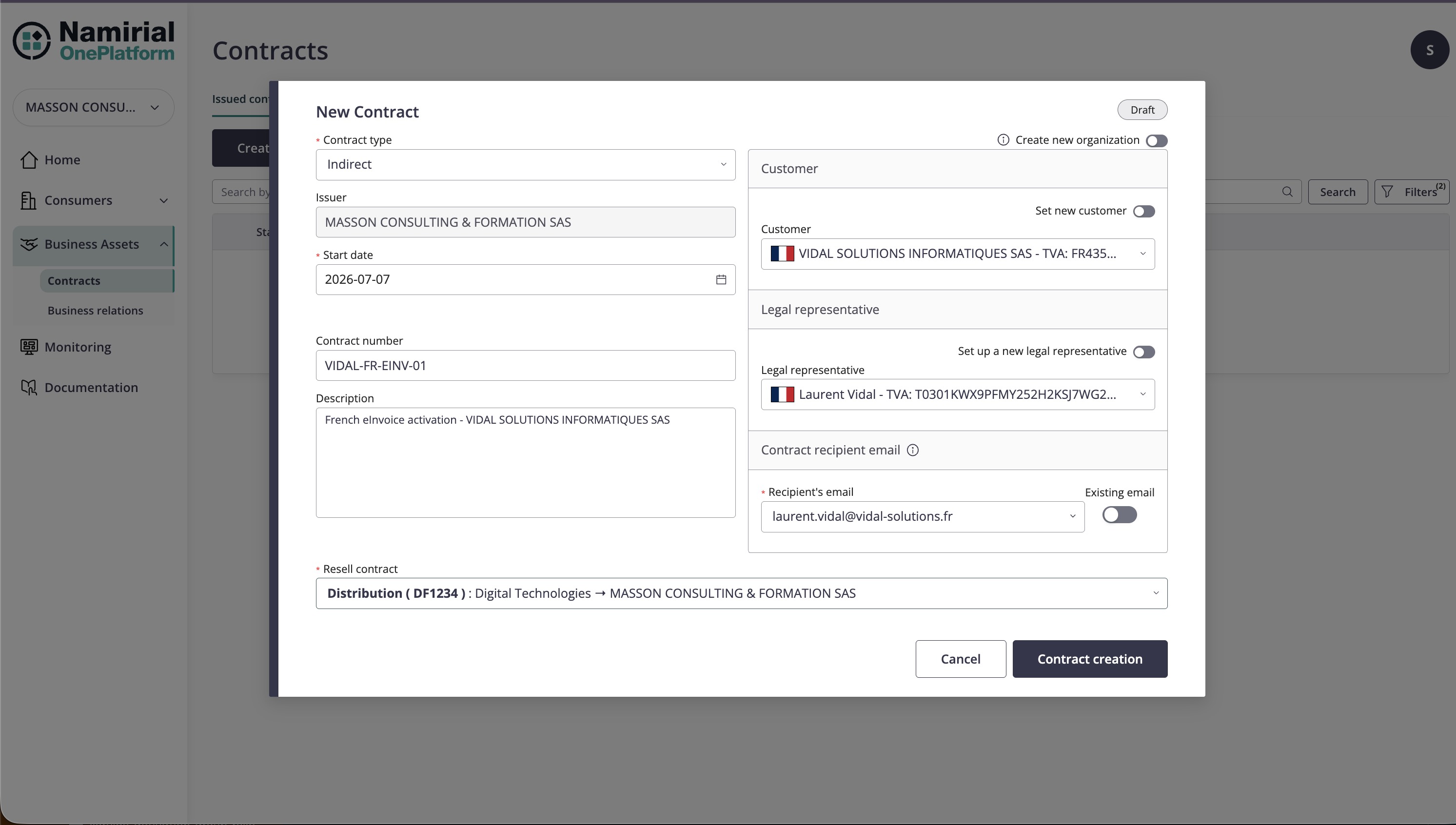
A contract defines the commercial and activation context used by downstream services.
The main contract information includes:
| Area | Purpose |
|---|---|
| Contract type | Defines the commercial relationship, for example direct or indirect. |
| Issuer | Organization that issues or owns the contract. |
| Customer | Customer or final customer receiving the service. |
| Legal representative | Person authorized to act for the customer when required by the product flow. |
| Recipient email | Email used for activation, completion, or signature-related flows. |
| Dates | Start date and optional end date for the contract context. |
| Contract number | Operational or commercial reference used for search and reconciliation. |
| Source or resell contract | Parent contract used when the service is distributed or resold. |
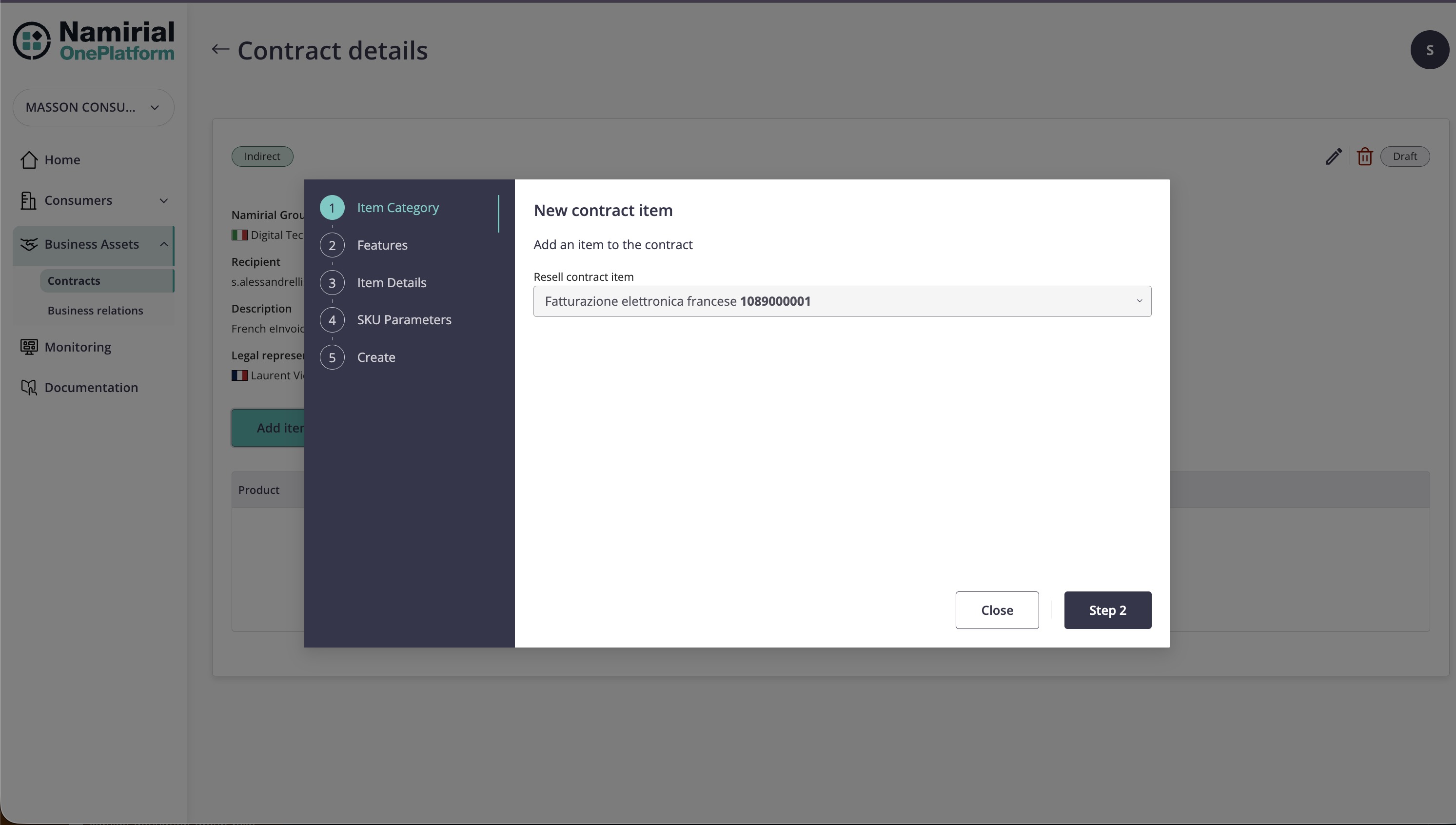
A contract item represents a product or service line inside the contract.
The item determines what product is activated for the customer, which features are enabled, which product parameters apply, and whether a Business Relation can be generated for consumption tracking.
The item category identifies the product or source contract item that will be added to the contract.
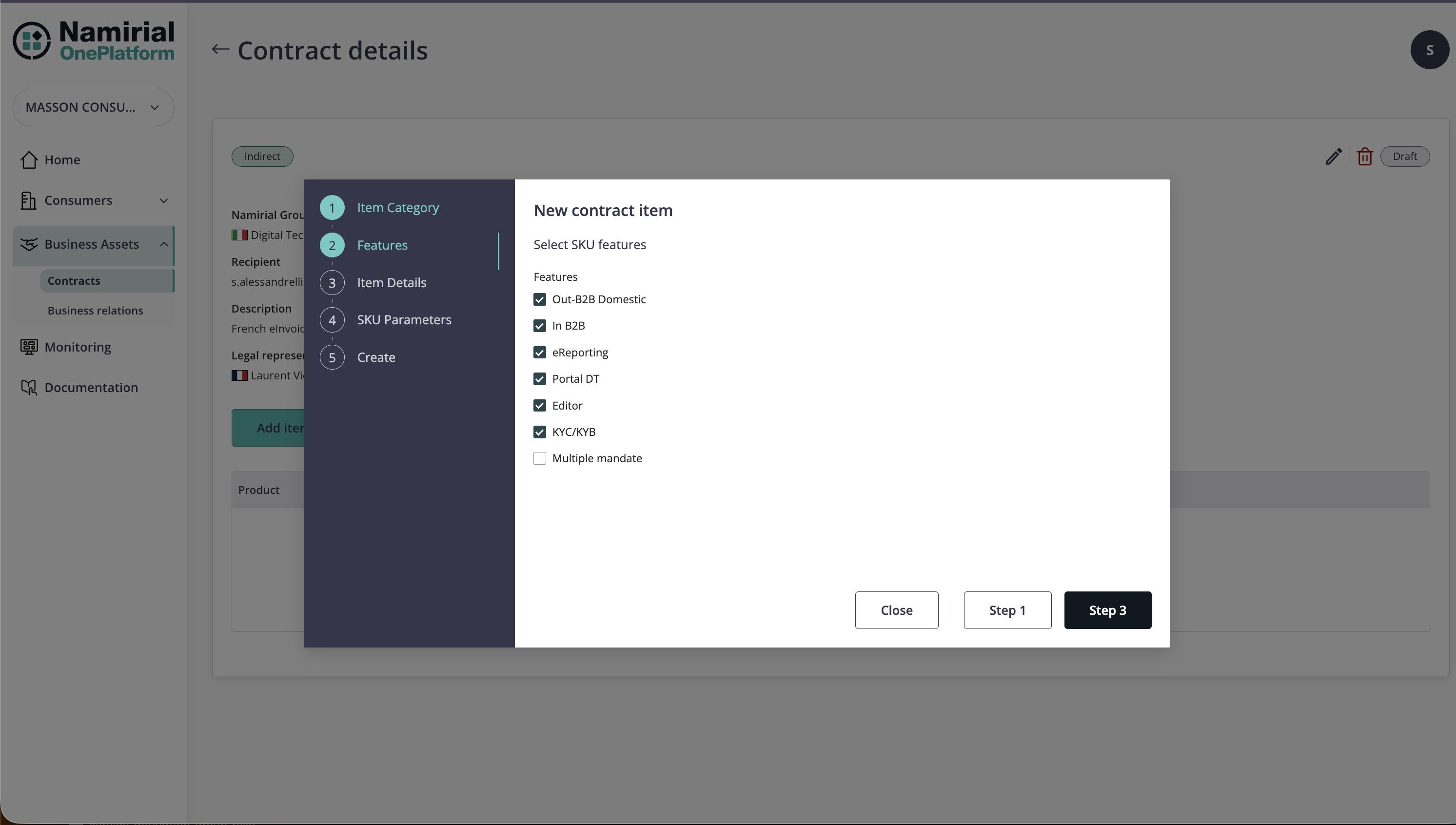
Features define the functional capabilities enabled for the selected product item.
The available feature set is product-specific. Some features can be selected by default, while others depend on prerequisites or on another feature being enabled first.
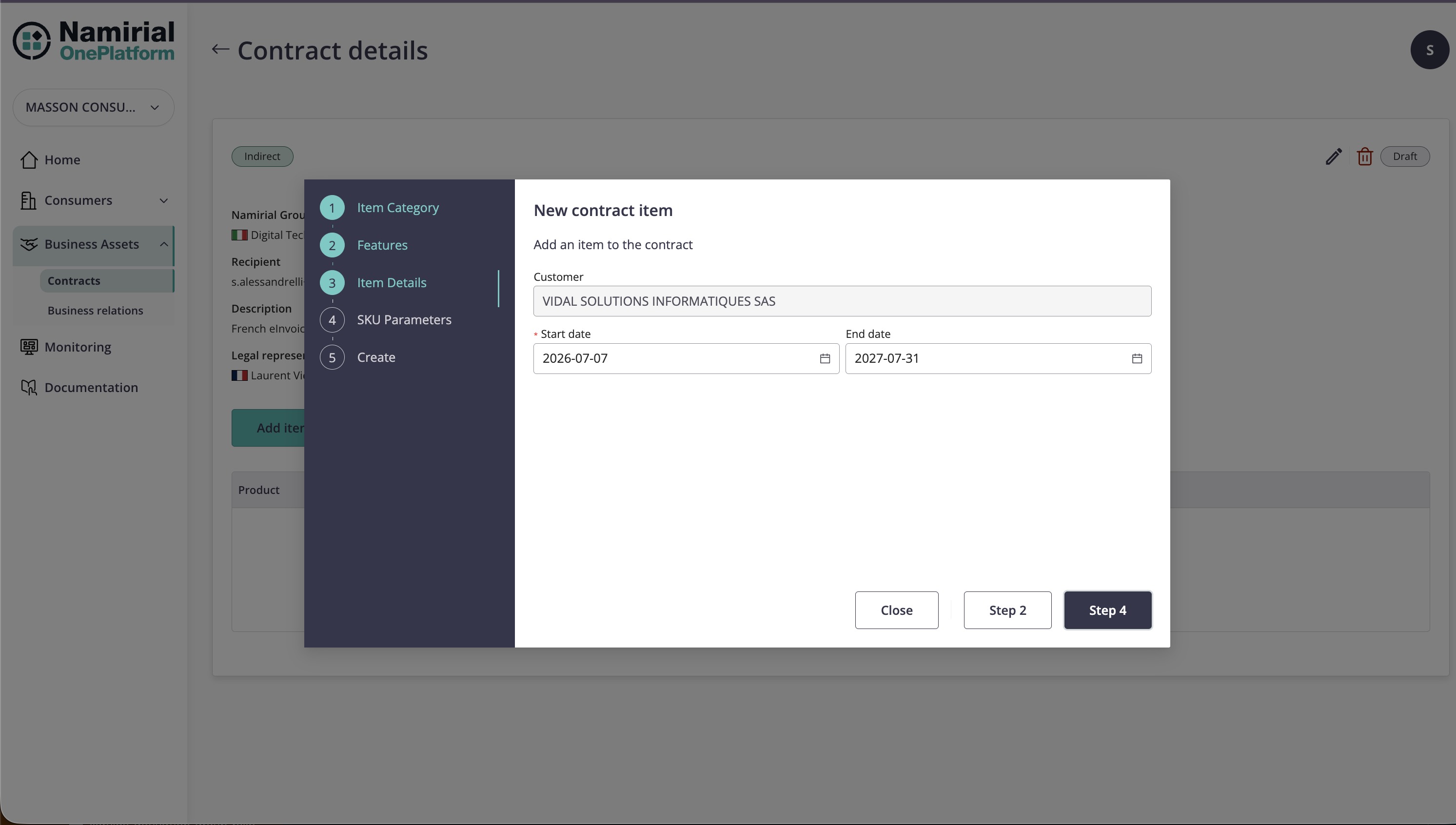
Item details bind the selected product item to the customer and define its validity period.
Typical information includes:
- customer;
- item start date;
- optional end date;
- product-specific detail fields.
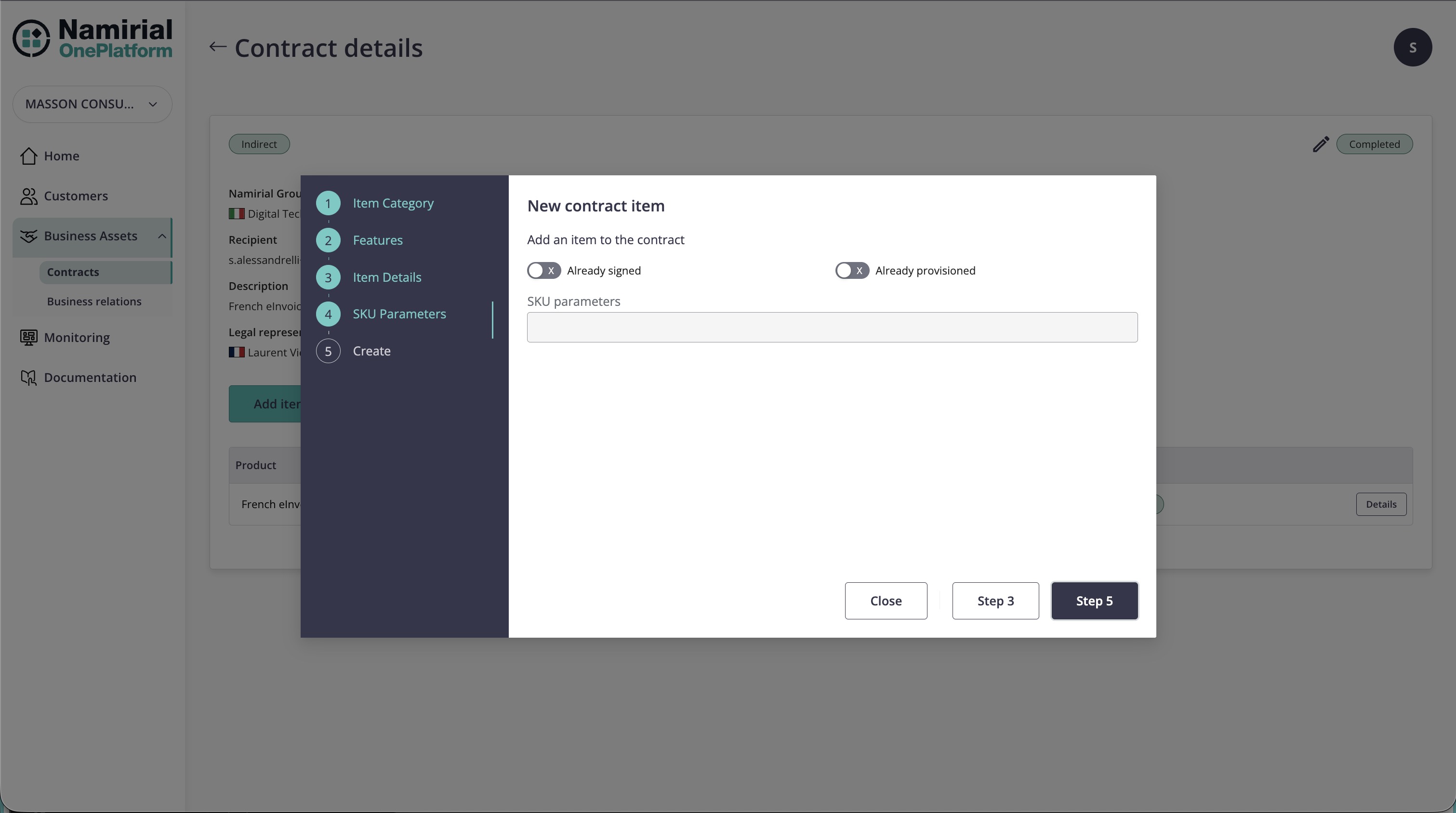
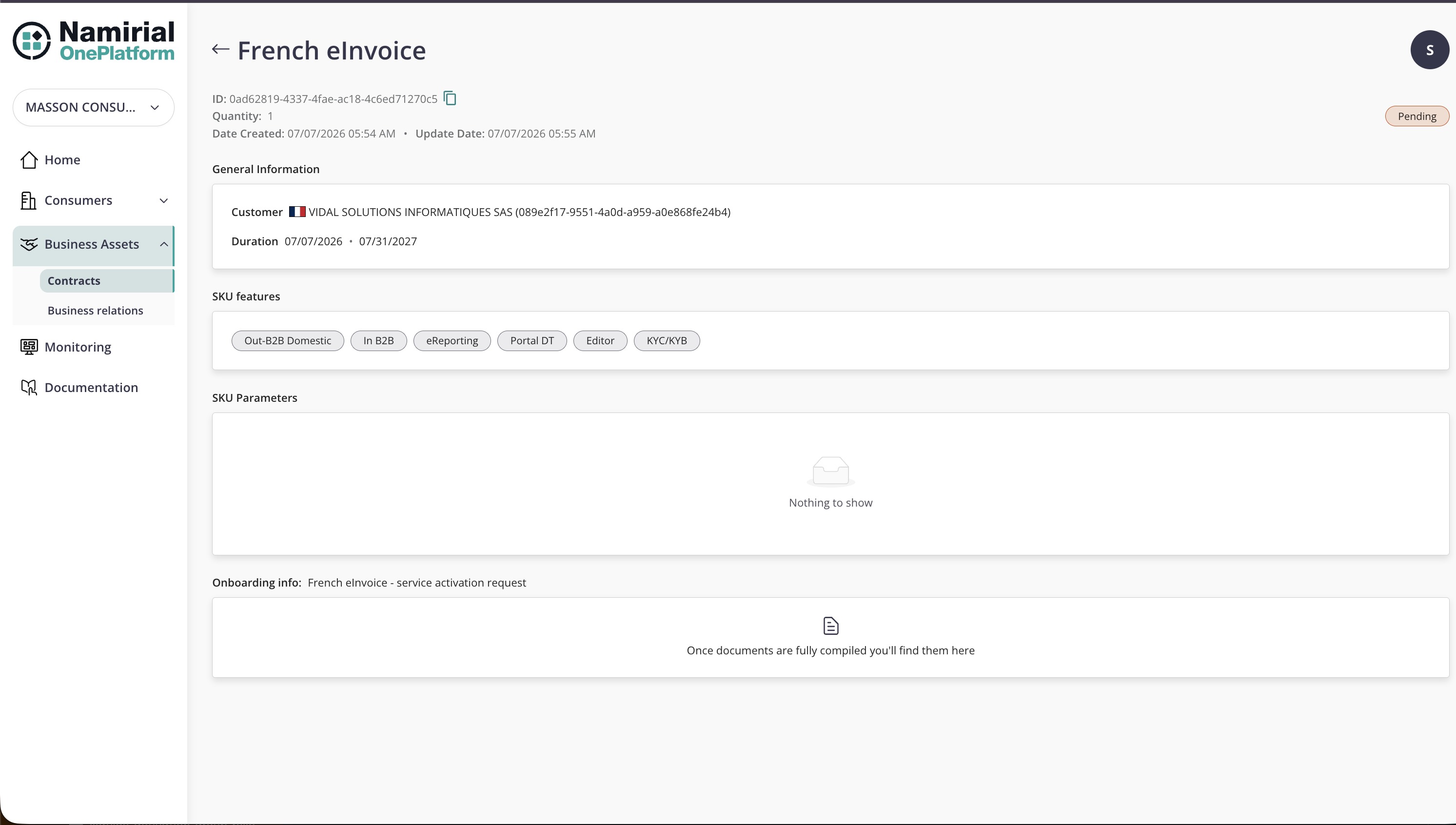
SKU parameters store product-specific activation or provisioning data.
They can include flags, options, technical values, or structured parameters required by the product. Their meaning is defined by the selected product and SKU.
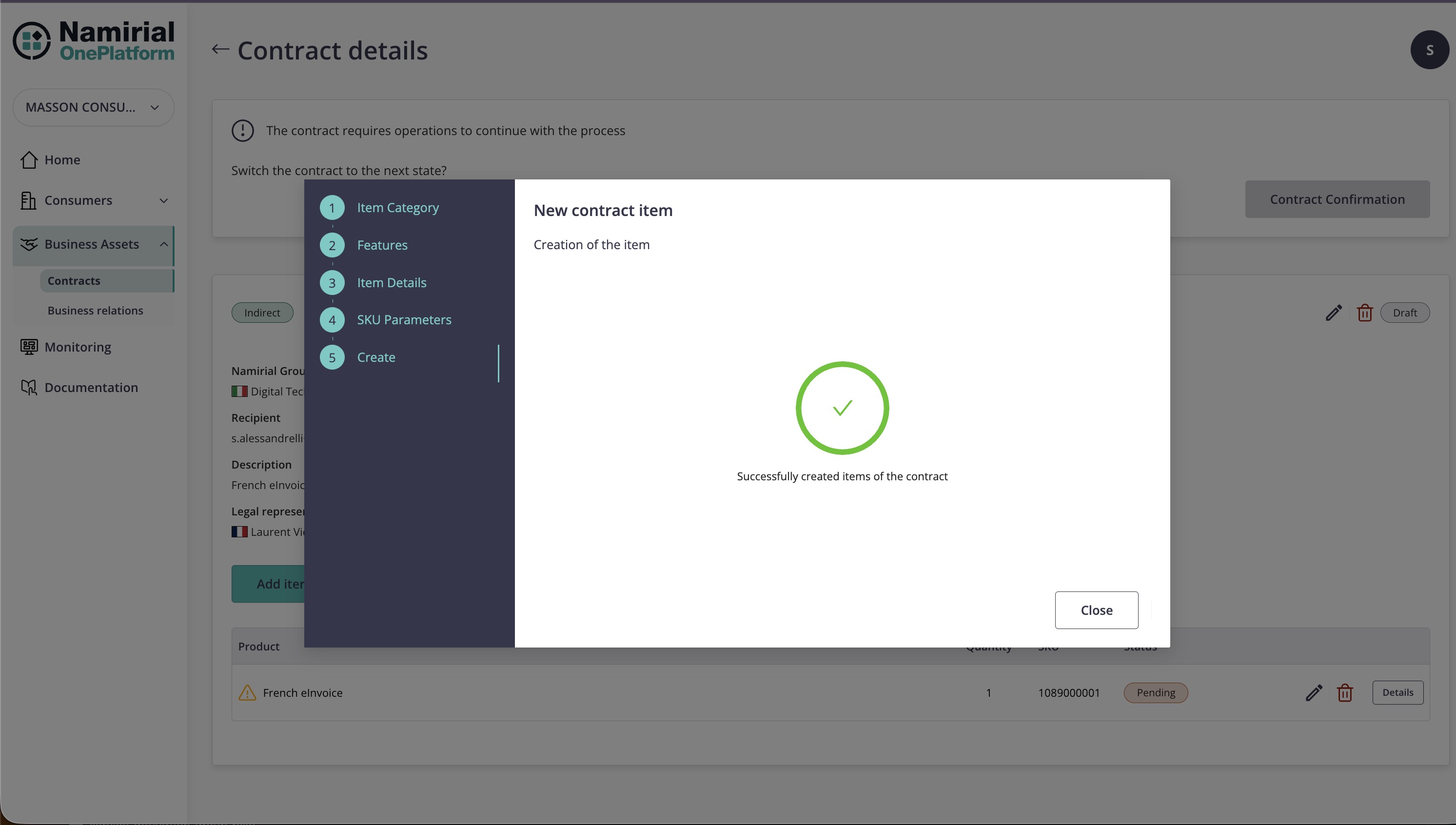
After the item is created, it becomes part of the contract and can be inspected from the contract detail page.
Some products require a Service Activation Group, or SAG, to collect and confirm the activation information associated with the contract.
The SAG groups contract-level data such as recipient, legal representative, customer, source contract, and activation description. It is the activation package that can be confirmed before the recipient or downstream provisioning flow continues.
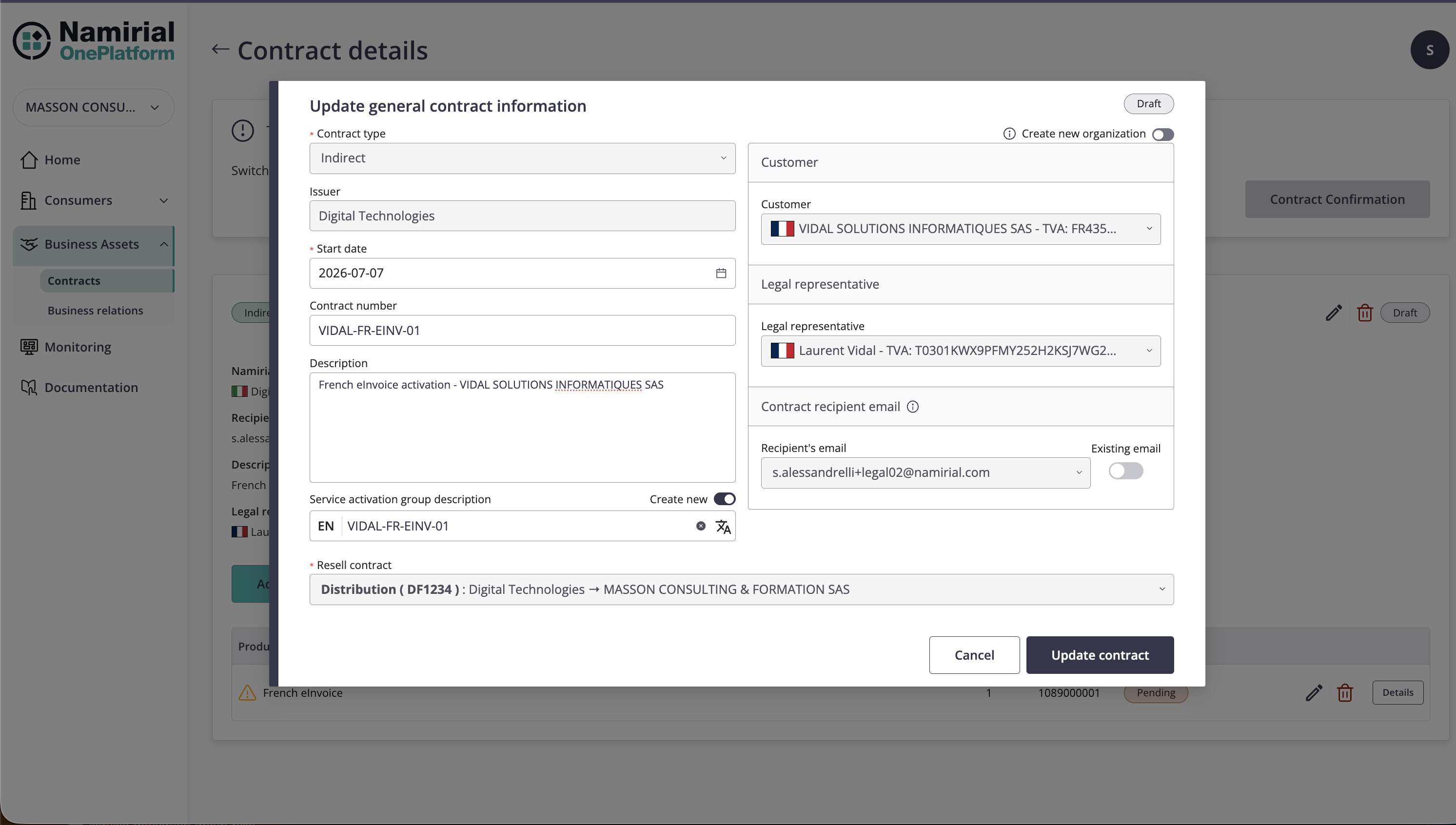
SAG confirmation moves the contract out of draft and makes the activation data available to the next phase of the process.
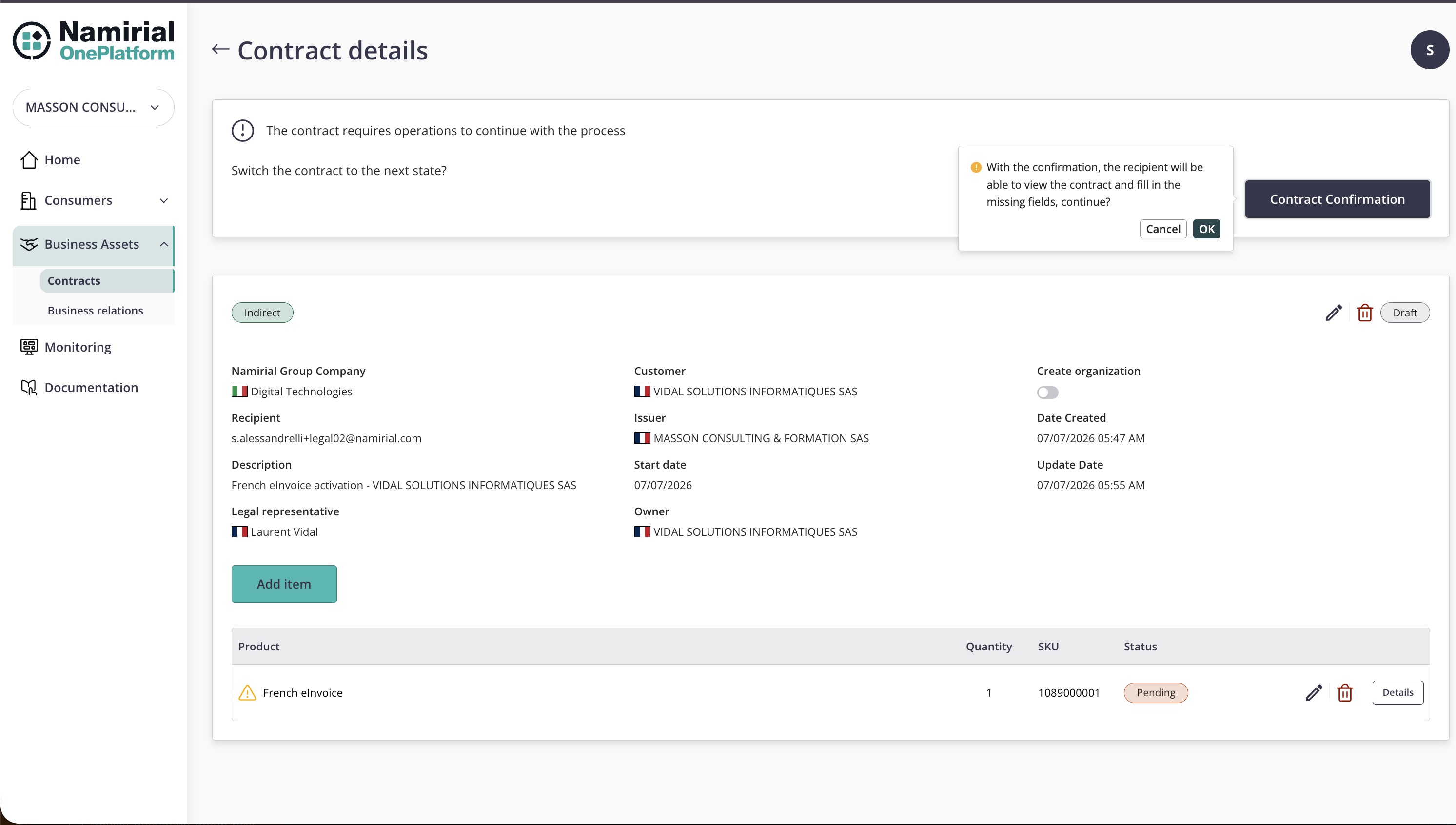
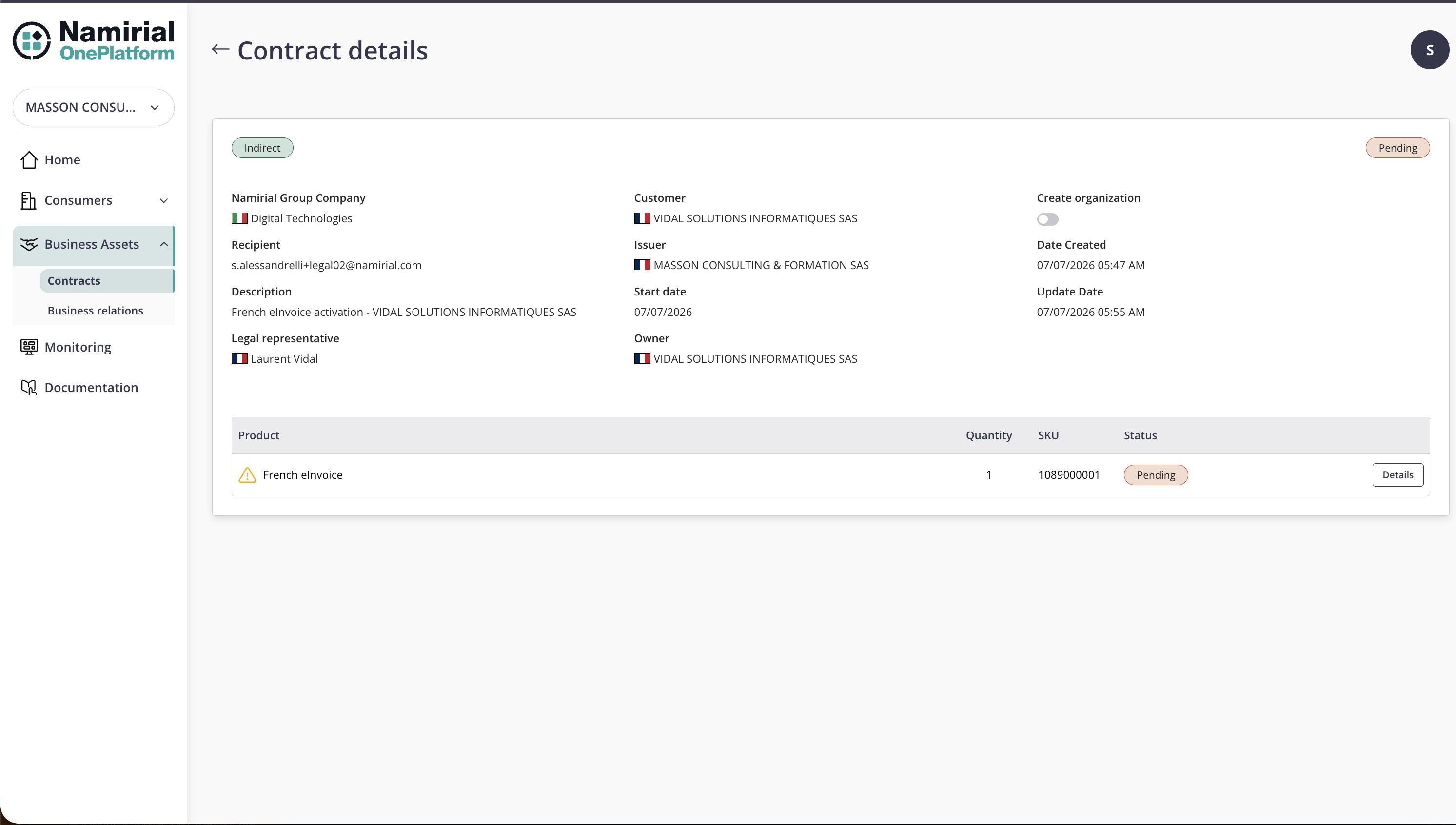
Contract status shows where the activation stands.
A contract can remain pending while the recipient completes information, signature steps, or downstream provisioning. The contract item detail shows the product-level status, selected features, SKU parameters, and any generated activation or provisioning data.
For products that report usage, the contract item is usually the source of the Business Relation used by consumptions. The Business Relation connects the product, customer context, legal entity, integrator, and consumer path used for metering.
When the selected SKU uses a Credit billing model, the item wizard also requires one or more credit metrics and a positive initial quantity for each metric. See Credit Management for the complete setup and lifecycle.